
TAVNS Devices Enter a Powerful New Era—but One Critical Question Remains
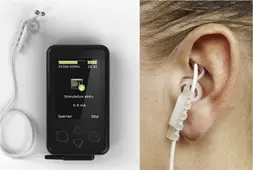
vagal nerve stimulation to the ear
Transcutaneous auricular vagus nerve stimulation (taVNS) is a noninvasive neuromodulation technique that stimulates branches of the vagus nerve through the ear. Over its relatively short 20-year history, taVNS has shown promise across a remarkably broad range of conditions, including epilepsy, depression, insomnia, chronic pain, anxiety, stroke rehabilitation, cognitive impairment, metabolic and cardiovascular disorders, tinnitus, and post-COVID illness. We’ve discussed it here, here and here on the blog, and I’ve used TAVNS in the clinic for years.
This review traces the evolution and classification of taVNS devices, which have advanced rapidly in recent years. However, the technology is developing faster than the science needed to guide its use. Devices differ considerably in stimulation frequency, intensity, pulse width, electrode placement, and treatment duration—and researchers still do not know which combinations produce the best results for specific conditions.
The authors argue that taVNS is entering a new era, but progress will require direct comparisons between devices and, critically, standardized stimulation protocols. Without greater harmonization, it remains difficult to compare studies or translate promising findings into reliable clinical care.
Wang L, Wang Y, Wang Y, Wang F, Zhang J, Li S, Wu M, Li L, Rong P.Transcutaneous auricular vagus nerve stimulators (TAVNS): a review of past, present, and future devices. Expert Rev Med Devices. 2022 Jan;19(1):43-61. doi: 10.1080/17434440.2022.2020095. Epub 2022 Jan 13. PMI D: 34937487.
Abstract TAVNS Past Present Future
Introduction: As an emerging neuromodulation therapy, transcutaneous auricular vagus nerve stimulation (taVNS) has been proven to be safe and effective for epilepsy, major depressive disorders, insomnia, glucose metabolic disorders, pain, stroke, post stroke rehabilitation, anxiety, fear, cognitive impairment, cardiovascular disorders, tinnitus, Prader-Willi Syndrome, and COVID-19.
Areas covered: Although the history of taVNS is only two decades, the devices carrying taVNS technique have been constantly updated. Especially in recent years, the development of taVNS devices has presented a new trend. To conclude, the development of taVNS devices has entered a new era, thus the update speed and quality of taVNS devices will be considerably improved in the future. This article reviewed the history and classification of taVNS devices.
Expert opinion: The correlation between the effectiveness and stimulation parameters from taVNS devices still remains unclear. There is a lack of standard or harmonization among different taVNS devices. Strategies, including further comparative research and establishment of standard, have been recommended in this article to promote the future development of taVNS devices.
Keywords: Neuromodulation; auricular acupuncture; auriculotherapy; transcutaneous auricular vagus nerve stimulation; vagus nerve stimulation.