
Acupuncture at Zusanli (ST36) for the benefits of sepsis-laboratory evidence for “preventive treatment of disease” and “holistic concept
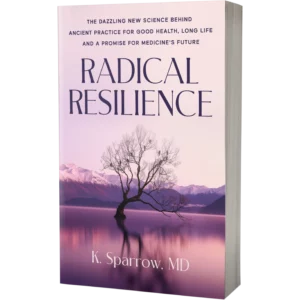 I discussed the importance of the time-honored point, Susanli as a preventive in my book. This study emphasized the importance of activating this point for prevention in certain conditions. This was the underlying message of my book and where the title came from Radical Resilience. That by employing acupuncture, you make your body more resilient to injury, illness and heartbreak.
Zeng L, Yan J. Acupuncture at Zusanli (ST36) for the benefits of sepsis-laboratory evidence for “preventive treatment of disease” and “holistic concept” in the protective effects of acupuncture: a literature review of rodent studies. Front Neurol. 2025 Sep 22;16:1645906. doi: 10.3389/fneur.2025.1645906. PMID: 41059507; PMCID: PMC12499358.
- Acupuncture at ST36 demonstrates profound anti-inflammatory and regulatory effects that align with the principle of preventive resilience—the body’s innate capacity to resist illness, recover from stress, and restore balance before disease takes hold.
- Rather than focusing on a single signaling pathway, ST36 stimulation mobilizes neuroendocrine and cellular systems—activating hormonal secretion and exocytosis—to maintain homeostasis and repair.
- This integrative action supports the Traditional Chinese Medicine idea of “Preventive Treatment of Disease,” offering a biological foundation for acupuncture as a hormetic stimulus that strengthens adaptability.
- Research shows that ST36 acupuncture can protect against inflammatory damage in sepsis and may help prevent or modulate obesity, urticaria, Alzheimer’s, and COVID-19—conditions rooted in chronic inflammation.
- Low-intensity electroacupuncture activates the vagal–adrenal anti-inflammatory axis even in healthy states, suggesting pre-emptive conditioning of the body’s defenses.
- Future studies using advanced imaging, neuro-mapping, and RNA sequencing aim to clarify how this ancient preventive mechanism enhances modern resilience.